
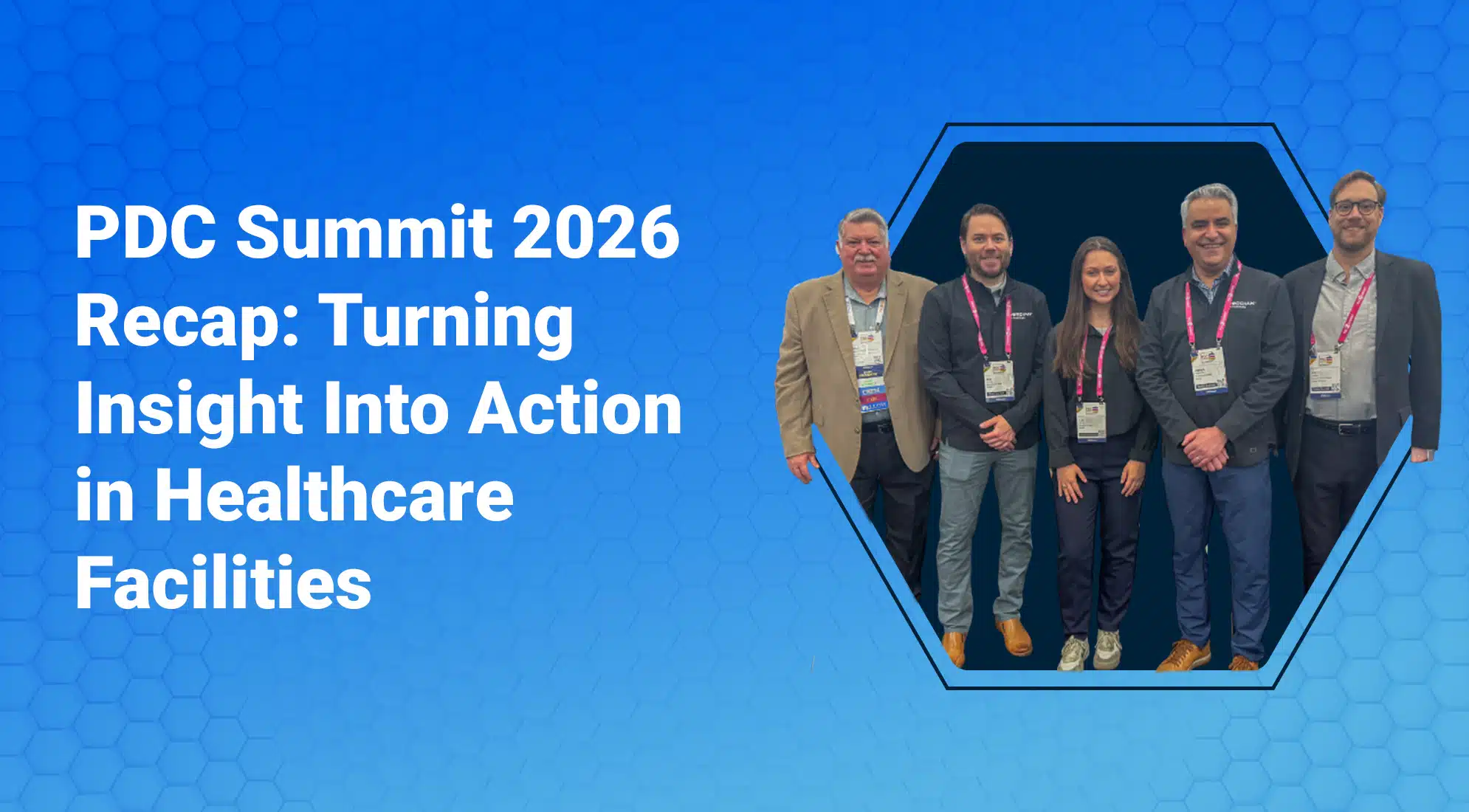
PDC Summit 2026 Recap: Turning Insight Into Action in Healthcare Facilities
April 13, 2026

The PDC Summit remains one of the most influential conferences in healthcare, bringing together leaders across planning, design, construction and operations. What makes the event uniquely valuable is its ability to convene facilities, clinical, design, construction and administrative stakeholders in one place — creating a shared forum for tackling healthcare’s most complex challenges.
This year’s summit reflected a reality many healthcare organizations know well. Attendees openly discussed the pressures they face every day:
- Aging infrastructure
- Growing deferred maintenance backlogs
- Staffing constraints across departments
- Heightened compliance and regulatory oversight
From Gordian’s perspective, a consistent theme emerged across sessions and conversations: Healthcare organizations largely know what needs to be done. The harder part is getting work started — and delivered — predictably.
That challenge shaped many of the most impactful discussions at PDC Summit 2026.
Alignment Is the Real Accelerator
Across multiple sessions, one message was clear: Delays rarely stem from a lack of data — they stem from misalignment.
Healthcare organizations often struggle with:
- Disconnected priorities between facilities, finance, clinical leadership and procurement
- Unclear ownership once needs are identified
- Bottlenecks created when teams operate in silos
When alignment breaks down, even well‑defined projects can stall.
Alignment happens earlier and faster when organizations rely on structured planning, shared data and consistent workflows. When stakeholders are working from the same information and following the same process, decisions accelerate and execution becomes more predictable.

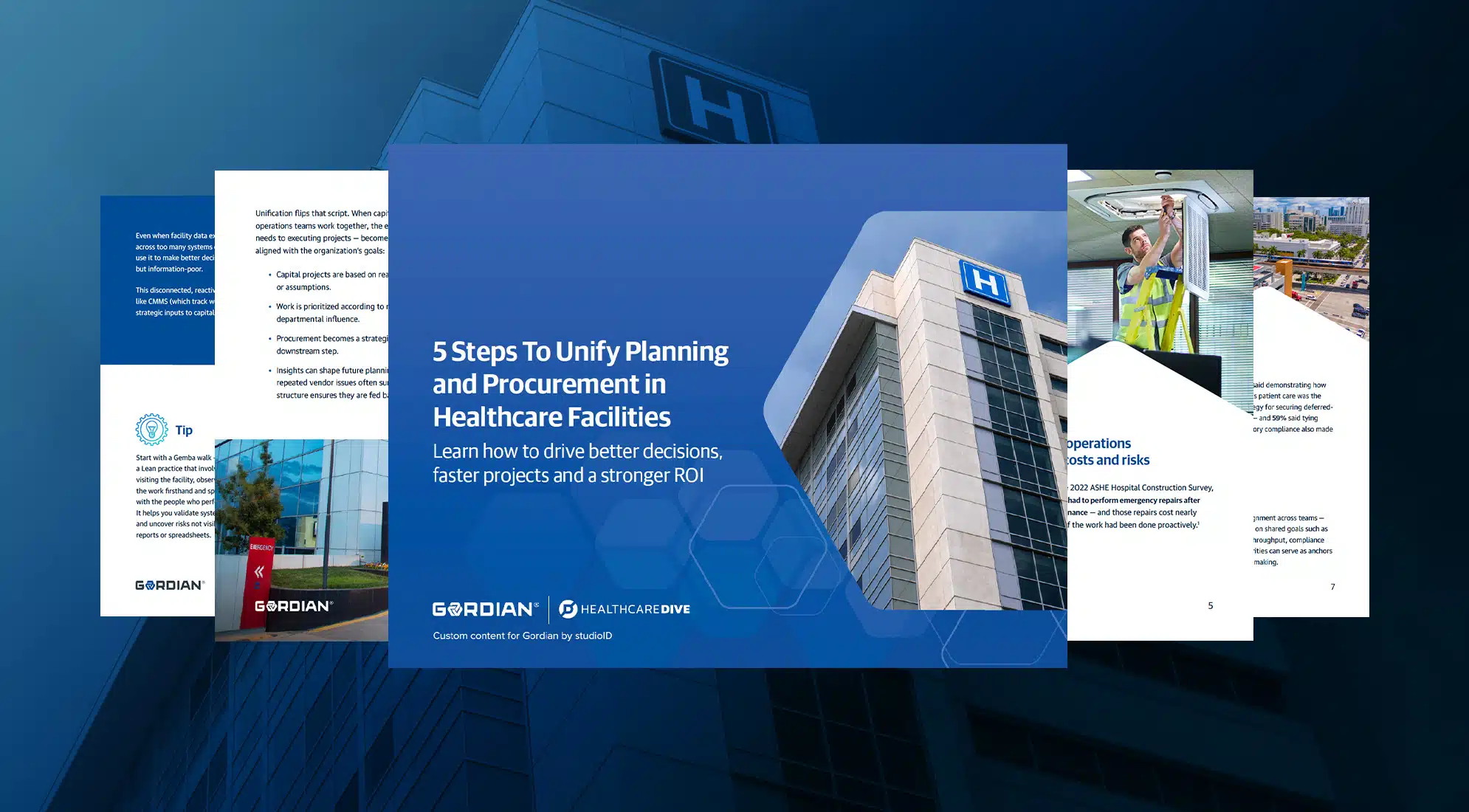
Download “5 Steps to Unify Planning and Procurement in Healthcare”
Learn more about how healthcare leaders can align planning, procurement and operations teams to accelerate timelines, optimize resources and make smarter capital decisions.
Deferred Maintenance Is No Longer a “Future” Problem
Deferred maintenance was repeatedly framed not as a long‑term concern, but as an immediate operational and patient experience risk.
Key discussions focused on:
- The compounding cost and risk of inaction
- The challenge of addressing backlog without increasing headcount
- The impact deferred maintenance has on safety, compliance and care delivery
Healthcare leaders acknowledged that putting off small capital work today often leads to larger, more disruptive failures tomorrow.
Facility Condition Assessments (FCAs) play a critical role in shifting deferred maintenance from an abstract problem to a clear, prioritized plan of action. When organizations have visibility into asset conditions, costs and risk, they can make smarter decisions and move forward with confidence.
Speed and Control Must Coexist in Regulated Environments
A recurring tension throughout PDC Summit was the need to move faster without sacrificing governance, transparency or compliance.
Common challenges included:
- Procurement bottlenecks
- Lengthy approval cycles
- Documentation and audit readiness requirements
Healthcare leaders aren’t looking to cut corners. They’re looking for ways to streamline delivery while maintaining control.
Job Order Contracting (JOC) was frequently referenced as a proven way to balance speed with accountability. By enabling faster project starts while maintaining cost visibility, standardized pricing and compliance controls, JOC supports the governance requirements healthcare environments demand.
Repeatable Delivery Beats One‑Off Success
While many organizations shared success stories, the most compelling examples focused on repeatability — not isolated wins.
The strongest approaches emphasized:
- Moving from reactive fixes to programmatic delivery
- Standardized scopes and predictable pricing
- Long‑term partnerships instead of one‑time projects
Healthcare systems are increasingly focused on doing more work, more consistently, without reinventing the process each time.
JOC enables healthcare teams to move more projects through the system by establishing a repeatable, scalable delivery model. When the process is already in place, teams can focus less on administration and more on outcomes.
Spotlight: Gordian at PDC Summit 2026
Gordian was proud to contribute to this year’s summit with a Discovery Stage session led by Mark Kenneday: “Turning FCA Findings into Action: A Practical Path to Predictable Project Delivery in Healthcare”
The session reinforced several key themes heard throughout the conference:
- Why projects often stall after needs are identified
- How organizations can move from insight to execution
- The importance of visibility, speed and security in healthcare project delivery
Attendees engaged in thoughtful discussion around how FCAs and JOC work together to create clear paths from assessment to action — a challenge many healthcare systems are actively working to solve.
Looking Ahead
Healthcare organizations don’t need more ideas — they need clear, executable paths to action.
As healthcare systems continue to evolve, the ability to:
- Align stakeholders early
- Address deferred maintenance proactively
- Deliver projects quickly and compliantly
- Scale success through repeatable processes
Gordian remains committed to helping healthcare leaders turn insight into action — predictably, transparently and at scale.
Ready to Continue the Conversation?
If you’d like to learn more about how Gordian supports healthcare organizations with facility planning, deferred maintenance and predictable project delivery, contact us now.
About Gordian
Gordian is the leading provider of Building Intelligence™ Solutions, delivering unrivaled insights, robust technology and expert services to fuel customers’ success through all phases of the building lifecycle. Gordian created Job Order Contracting (JOC) and the industry-standard RSMeans Data. We empower organizations to optimize capital investments, improve project performance and minimize long-term operating expenses.
Share this: